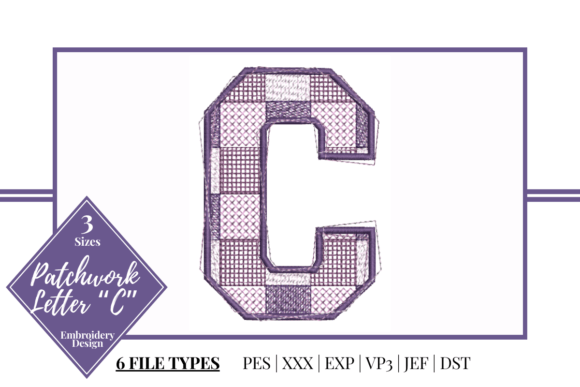
Patchwork Letter C: A Designer's Review for Brand Merch
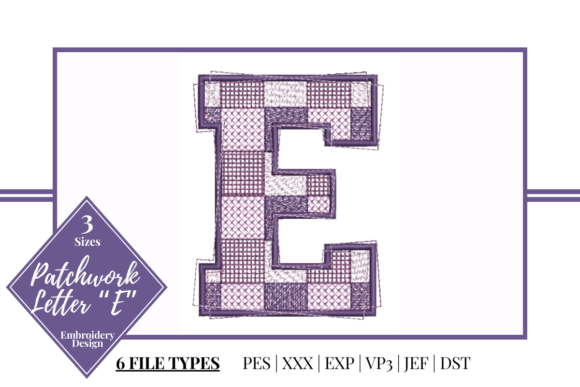
As an embroidery designer who has spent years digitizing logos and reviewing files for small business clients, I approach every new machine embroidery design with a critical eye. It is not just about whether the stitches look pretty on a screen; it is about how that design performs when stitched onto a cap, an apron, or a tote bag that will be washed weekly. Today, I am reviewing the Patchwork Letter C, a file categorized under Borders but possessing significant potential as a standalone brand mark for boutique owners and merch creators.
My first impression of the Patchwork Letter C is that it strikes a perfect balance between rustic charm and modern professionalism. The "patchwork" aesthetic suggests a handmade quality, which is incredibly valuable for bakeries, florists, pet brands, and creative studios trying to convey authenticity. Unlike sterile, vector-perfect fonts, this design feels warm and inviting. However, for a small business owner, "warm" cannot come at the expense of durability. The description notes that colors can be altered based on the thread in your machine, which is a crucial feature for maintaining brand identity. Being able to match specific Pantone codes or corporate colors ensures visual consistency across all your design assets.
Real-World Application for Small Business Merch
Let us imagine a local coffee shop or a handmade jewelry boutique looking to upgrade their staff uniforms or create retail products. The Patchwork Letter C shines in these scenarios because it functions beautifully as an embroidered patch. Instead of directly stitching a logo onto a delicate garment, a business can stitch this design onto a twill backing, cut it out, and sew it onto a denim jacket or a canvas tote. This method adds a layer of premium texture that customers love.
For custom apparel, this design works exceptionally well as a chest logo accent on work shirts. Its structure is bold enough to be recognized from a distance but detailed enough to look high-quality up close. If you run an Etsy shop selling home goods, consider using this as a tote bag design. The patchwork style complements natural fabrics like linen and heavy cotton perfectly. Furthermore, for service industries, apron embroidery is a fantastic use case. A bakery could stitch the letter "C" in cream and brown threads on a chocolate brown apron, creating an instant association with their brand without overwhelming the garment.
I also see strong potential for cap embroidery. Caps are tricky due to their curved surface, but a single letter design often navigates the curve better than wide, horizontal logos. If the digitizing is tight, this could serve as a stylish side-logo on a dad hat or a front-center mark on a trucker cap. For event merch, such as a craft fair or a pop-up shop, this design can be quickly stitched onto giveaway items, acting as a memorable token of the event.
Navigating Technical Challenges and Fabric Textures
While the aesthetic appeal is high, we must discuss where the Patchwork Letter C requires careful handling. The term "patchwork" implies multiple color changes and potentially distinct sections within the letter. When scaling this down for a small patch size, such as a label on a pet collar or a small pocket detail, you must verify the stitch density. If the design is too dense, it will become stiff and may pucker, especially on stretchy fabrics like polo shirts used for uniforms.
Curved surfaces present another challenge. If you are applying this to a rounded cap front or a sleeve, ensure the underlay is sufficient to prevent the fabric from pulling. Additionally, pay close attention to thread colors contrast. On dark uniforms, a light-colored patchwork design will pop, but if the internal sections of the "C" are too similar in tone, the patchwork effect will be lost, and it will just look like a solid block. Always test your digital embroidery file on the actual fabric you intend to use. A design that looks crisp on polyester might sink into a fluffy towel or get lost on a textured wool blend.
Frequent washing is the ultimate test for any commercial embroidery project. Patchwork styles often involve many stops and starts. Ensure that your machine ties off threads securely, or consider using a locking stitch setting if your software allows. For items like aprons and work shirts that undergo industrial laundering, the longevity of the stitch is paramount. If the design relies on tiny, intricate outlines, these may fray over time. It is often better to simplify the color count for high-wear items to reduce weak points in the stitching.
Impact on Brand Identity and Customer Trust
In the world of handmade products and small businesses, perception is reality. Using a generic font downloaded from the internet can make a brand feel amateurish. Conversely, a well-executed, custom-looking embroidery design like the Patchwork Letter C elevates the perceived value of the finished product. It signals to the customer that care was taken in the creation of the item. This attention to detail builds trust.
When a customer sees a cohesive look across your packaging, your staff uniforms, and your social media printable mockups, it reinforces professional reliability. This design helps bridge the gap between "hobbyist" and "established brand." Whether it is used as a hang-tag accent or a main logo on a hoodie, the tactile nature of embroidery adds a sensory dimension to your branding that print cannot replicate. It makes the brand feel tangible and grounded.
Essential Notes for the Professional Embroiderer
Before you commit to a production run for a client, there are several practical steps you must take with the Patchwork Letter C. First, always test it in black and white or high-contrast monochrome. This strips away the distraction of color and reveals the structural integrity of the digitizing. If the shape holds up in one color, it will likely hold up in multiple.
Second, check the hoop size requirements. While the category is listed as Borders, ensure the file fits within the hoop you have available, especially if you are working with smaller hoops for cap frames. Third, select the appropriate stabilizer. For woven fabrics like canvas or denim, a cut-away stabilizer is usually best for durability. For knits, a tear-away might suffice, but test first to avoid puckering.
Create a physical printable mockup or a stitched sample for client approval before running the full batch. Show them how the thread colors interact with their specific fabric choice. Finally, and most importantly, confirm the commercial licensing terms. The description mentions it is an embroidery design, but you must verify if the license covers unlimited production for resale or if there are restrictions on the number of items you can create. Never assume a file is free for commercial use without reading the specific terms provided by the creator.
In conclusion, the Patchwork Letter C is a versatile asset for any small business looking to add a touch of artisanal flair to their merchandise. With proper testing regarding stitch density, fabric compatibility, and color contrast, it can serve as a powerful tool for building a recognizable and trusted brand identity. Whether you are decorating caps, aprons, or tote bags, this design offers the professional finish that today's consumers expect from quality handmade goods.